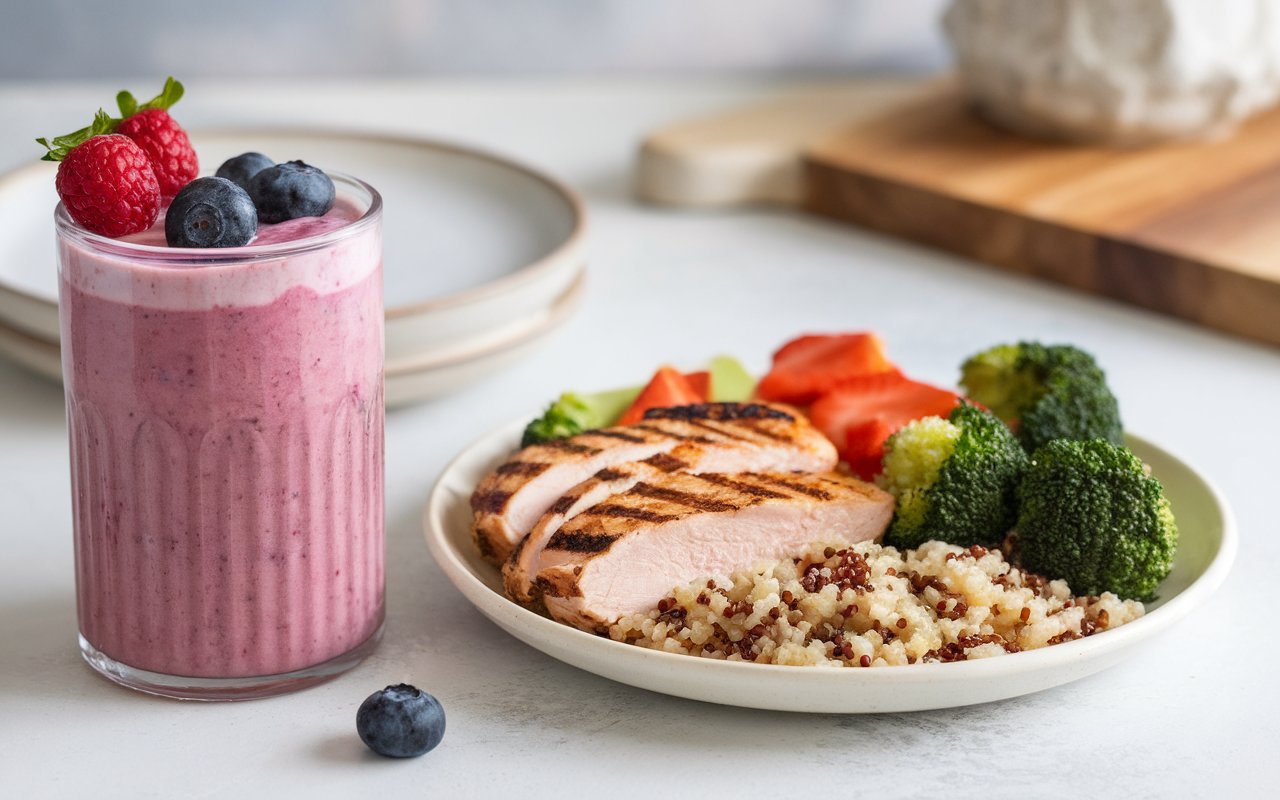
How to Combine Smoothies with Real Food for Sustainable Weight Loss
Smoothies can be a powerful tool for weight loss, but they work best when paired with real, solid food. Many people assume weight loss requires replacing all meals with smoothies, while others use smoothies as random add-ons. Both approaches often backfire.
The key to sustainable weight loss is learning how to combine smoothies with real food in a way that supports hunger control, energy levels, and long-term consistency. In this post, you’ll learn exactly how to balance smoothies and solid meals for results that last.
Why Smoothies Alone Aren’t Enough
Smoothies are convenient, nutritious, and easy to digest—but relying on them exclusively can lead to:
- Increased hunger
- Cravings for crunchy or savory foods
- Diet fatigue
- Inconsistent results
Solid food plays an important role in satiety, digestion, and satisfaction. Chewing food helps your brain recognize fullness more effectively. Smoothies should support your diet, not replace every meal.

The Best Way to Use Smoothies for Weight Loss
For most people, smoothies work best when used:
- As 1–2 meals per day
- Alongside balanced solid meals
- With adequate protein and fiber
This approach creates structure without restriction.
How to Structure a Day with Smoothies and Real Food
Here’s a simple framework you can adapt:
Option 1: Smoothie + Solid Meals
- Breakfast: Weight loss smoothie
- Lunch: Balanced real-food meal
- Dinner: Balanced real-food meal
Option 2: Solid Breakfast + Smoothie Lunch
- Breakfast: Eggs, fruit, and vegetables
- Lunch: High-protein smoothie
- Dinner: Lean protein, veggies, healthy carbs
Option 3: Smoothie + Snack + Dinner
- Breakfast or lunch: Smoothie
- Snack: Protein + fiber (yogurt, apple, nuts)
- Dinner: Real-food meal
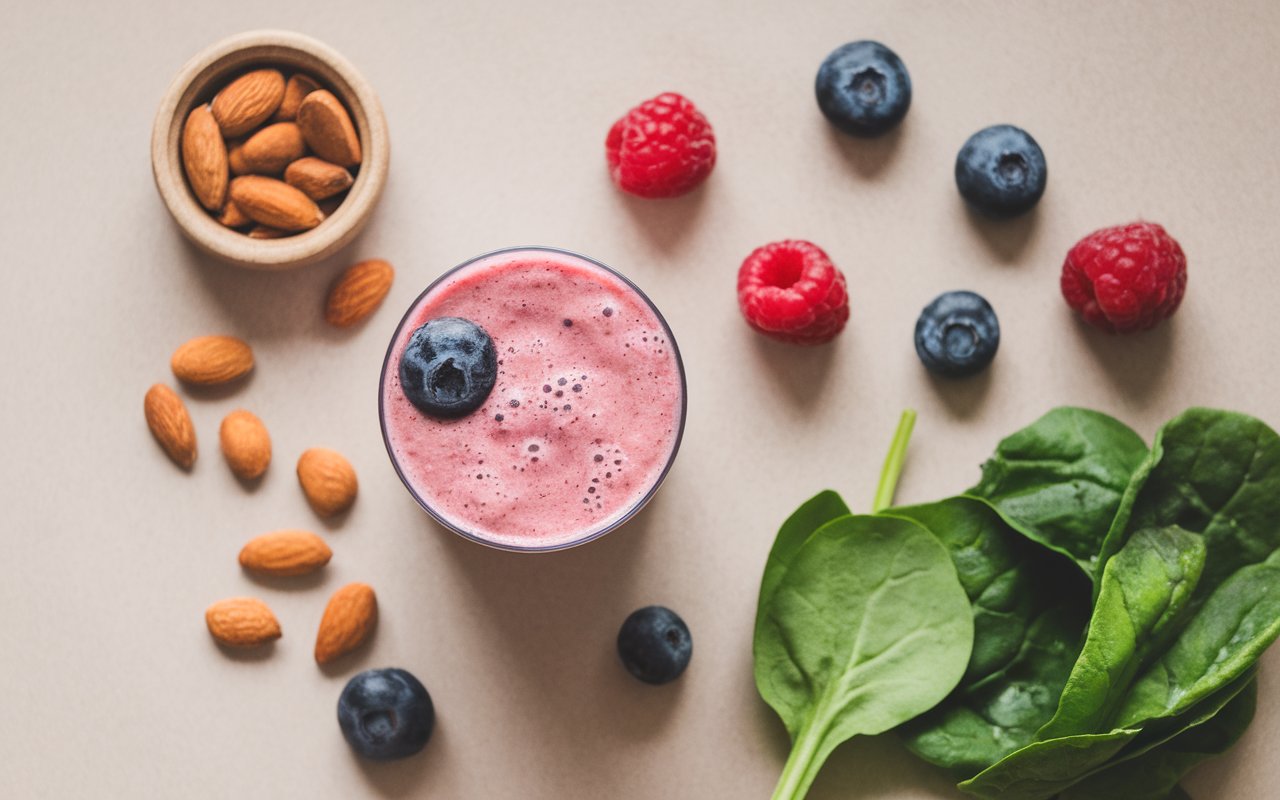
What Makes a “Balanced” Real-Food Meal?
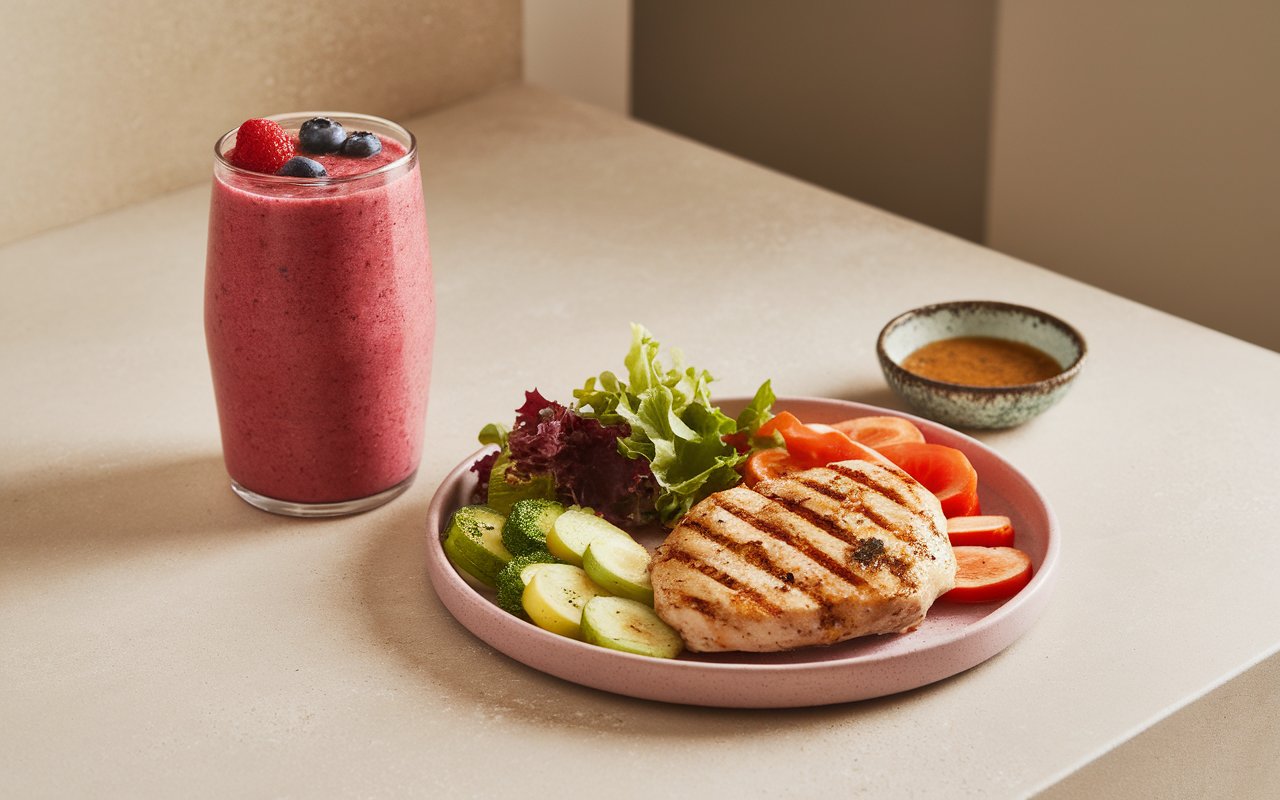
When pairing smoothies with solid meals, focus on balance, not perfection. A balanced meal includes:
- Lean protein (chicken, fish, eggs, tofu)
- Vegetables (fresh or cooked)
- Healthy carbohydrates (rice, potatoes, beans, whole grains)
- Healthy fats (olive oil, avocado)
Avoid extreme restriction, this often leads to overeating later.
Common Mistakes When Combining Smoothies and Food
Avoid these patterns:
Using Smoothies as Add-Ons. Drinking smoothies in addition to full meals can increase calories unintentionally.
Skipping Protein at Solid Meals. Protein matters just as much outside smoothies as it does inside them.
Replacing Meals Randomly. Consistency is key. Decide ahead of time when smoothies fit into your day.
Smoothies vs Snacks: Know the Difference
A smoothie can be:
- A meal replacement (with enough protein and fiber)
- Or a snack (lighter, smaller portions)
Problems arise when snack-sized smoothies are used as meals, or meal-sized smoothies are added on top of meals.
For guidance, see: Should You Drink Smoothies as Meals? What Actually Works for Weight Loss
How Smoothies Support Long-Term Weight Loss
When used correctly, smoothies:
- Simplify meals
- Reduce decision fatigue
- Increase vegetable intake
- Help manage portions
- Support consistency
Example Day of Smoothies + Real Food
Breakfast: Protein smoothie with berries, spinach, almond milk, and flaxseed
Lunch: Grilled chicken salad with mixed vegetables and olive oil
Snack (optional): Greek yogurt with berries
Dinner: Salmon, roasted vegetables, and quinoa
This approach supports fullness, energy, and sustainability.
How This Fits into the Smoothie Weight Loss System
Combining smoothies with real food works best when you also:
- Prioritize protein
- Control fruit portions
- Use low-calorie add-ins
- Drink smoothies slowly
- Keep recipes simple
You can see the full system here: How to Lose Weight with Smoothies: Simple Tips That Actually Work
Final Tips
Smoothies don’t replace real food, and they don’t need to. The most successful approach to weight loss is one you can maintain. Combining smoothies with balanced solid meals allows you to enjoy convenience without sacrificing satisfaction.
Use smoothies strategically, eat real food mindfully, and focus on consistency over perfection.
Which Drink Before Bed Is Perfect For Your Nighttime Routine? Quiz
Which Drink Before Bed Is Perfect For Your Nighttime Routine? Which Drink Before Bed Is Perfect For You? Discover[…]
Drink Before Bed for Clear Skin: 6 Beauty Drinks for Overnight Glow
Drink Before Bed for Clear Skin: 6 Beauty Drinks for Overnight Glow Want clearer, more radiant skin? Your nighttime[…]
Anti-Bloat Drink Before Bed: 6 Simple Recipes for a Flat Stomach
Anti-Bloat Drink Before Bed: 6 Simple Recipes for a Flat Stomach Feeling bloated at night can be uncomfortable, and[…]
Comments are closed